
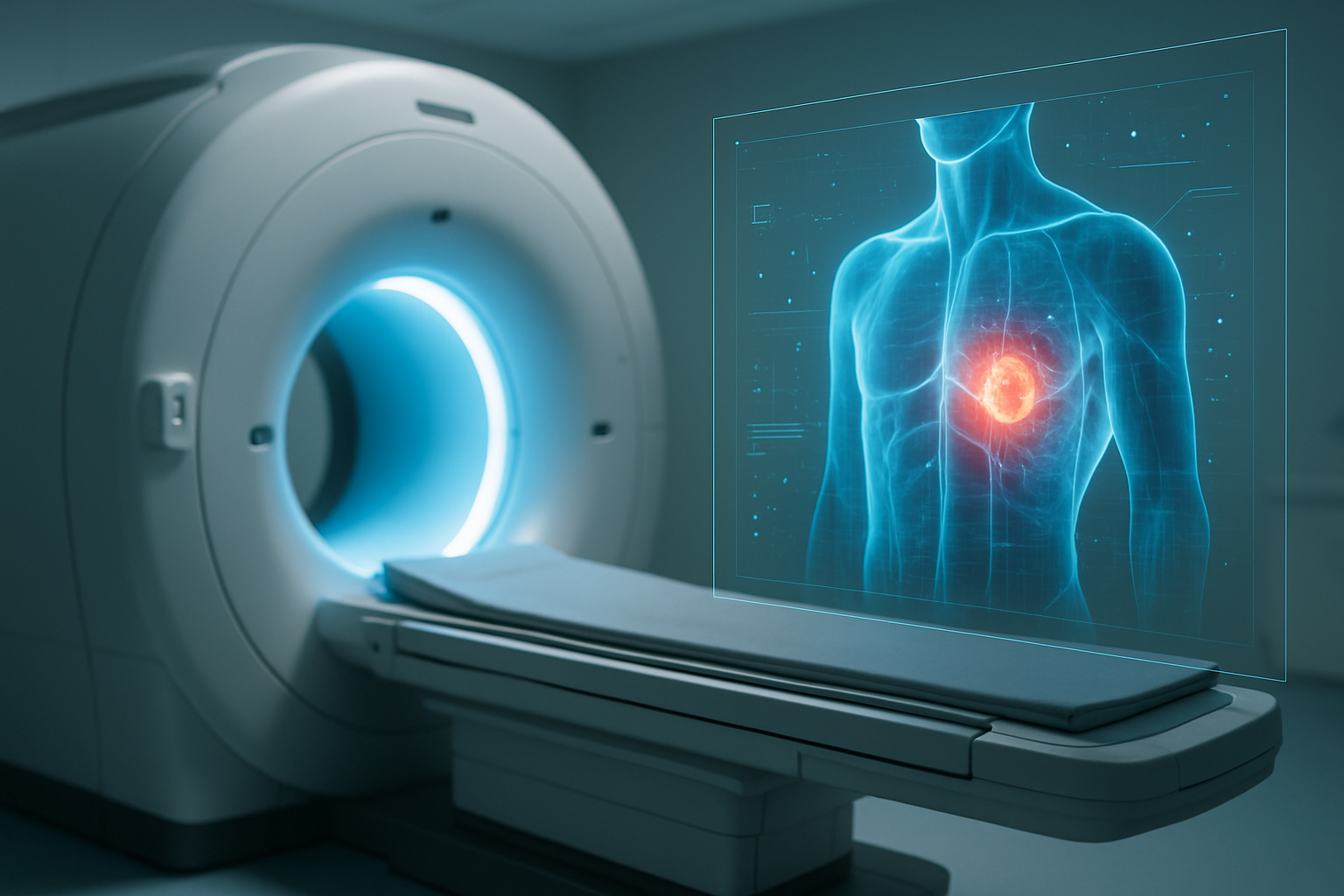
AI detects cancer with 98% accuracy in new study
Researchers at Stanford University have published an artificial intelligence model capable of identifying tumors in MRI scans with 98.2% accuracy. The clinical study, conducted with over 10,000 patients from 15 hospitals in the US and Europe, shows that the system reduced diagnosis time by 40% compared to traditional analysis by radiologists.
How the model works
The AI was trained on thousands of labeled MRI images, learning to recognize subtle patterns that indicate the presence of tumors. The model uses deep neural networks to analyze each scan in seconds, highlighting suspicious areas for medical review. According to the researchers, the technology does not replace the radiologist but acts as a support tool, increasing efficiency and reducing the chance of human error.
Study results
The clinical study involved 10,247 patients from 15 hospital centers, with different types of cancer (breast, lung, prostate). The model achieved 98.2% accuracy in detecting tumors, with a low false positive rate. Additionally, the average time for issuing a report dropped from 4 hours to 2 hours and 24 minutes—a 40% reduction.
Implications for medicine
The creation of highly accurate AI models could transform oncological diagnosis, especially in regions with a shortage of radiologists. Faster diagnosis allows for earlier treatment initiation, which can increase survival rates. However, researchers warn that the technology still needs to be validated in more diverse populations and real clinical settings before large-scale adoption.
Next steps
The Stanford team plans to expand tests to other types of exams (CT, ultrasound) and integrate the system into electronic health record platforms. The next step is to obtain FDA regulatory approval for clinical use. Meanwhile, the medical community eagerly follows AI advances in the fight against cancer.