
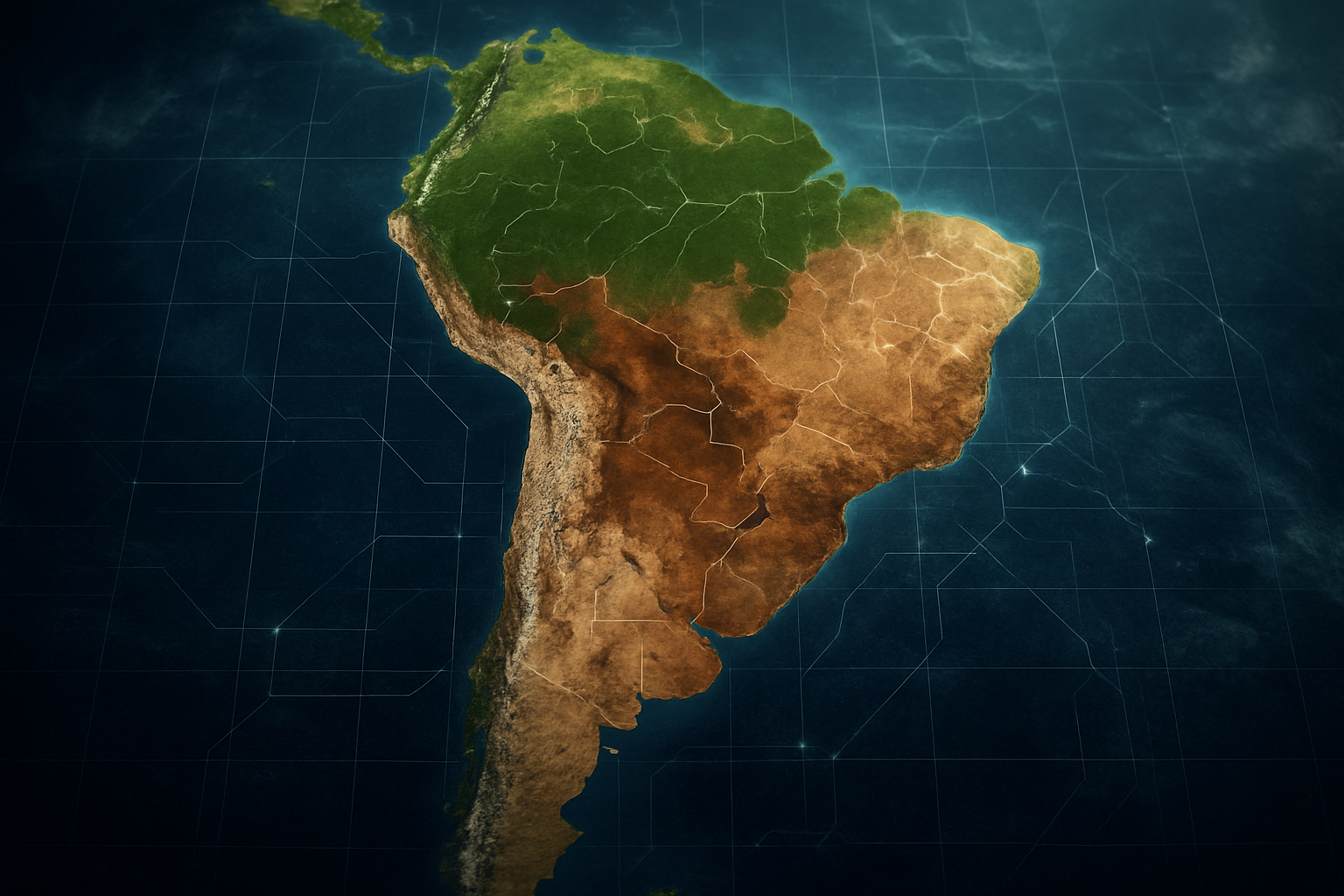
AI predicts droughts in South America weeks in advance
A new artificial intelligence model developed by the University of São Paulo (USP), in partnership with Google Research, promises to revolutionize drought prediction in South America. Trained on 20 years of satellite and meteorological data, the system can anticipate extreme events up to 40 days in advance with 85% accuracy. The technology is already being tested in real-time by the National Center for Monitoring and Early Warning of Natural Disasters (Cemaden).
How the model works
The AI algorithm was fed with a vast set of historical data, including satellite images, soil moisture measurements, temperatures, wind patterns, and precipitation. After training, the model learned to identify patterns that precede severe droughts, enabling localized predictions.
Successful test
In March 2026, the model successfully predicted a drought that hit the Midwest region of Brazil. The forecast was issued 40 days before the event, with 85% accuracy, giving authorities and farmers time to prepare. "This is a tool that can save lives and save billions," said a researcher involved in the project.
Real-time implementation
Since May 2026, Cemaden has been testing the system in real-time, integrating predictions into its routine of issuing alerts. The expectation is that AI will help mitigate the impacts of future droughts, enabling preventive actions such as water distribution, agricultural planning, and rationing.
Next steps
Researchers plan to expand the model to predict other types of natural disasters, such as floods and heat waves. The partnership with Google Research should also allow for continuous improvement in accuracy. The tool is available to interested government agencies and research institutions.